The Italian Wife

London explained by a very Italian villager adopted by a very multiethnic family

  • New Page
  • Blog
  • About
  • Contact
  • Subscribe by email
WhatsApp Image 2020-02-11 at 12.31.54 PM.jpeg

L'amore ha un prezzo

February 14, 2020 by Daria Simeone

L’amore ha un prezzo.

E non è una metafora sul dare incondizionatamente: “T’ho dato due figlie! Cazzo regalami un buono di Zara!”
O sul sacrificare i propri spazi vitali: “Oh ma almeno la colazione la posso fa da solaaaa?”
O accollarsi i difetti di un coinquilino ingombrante e disordinato: “Ma ancora sti cazzo di calzini?”
O rinunciare a delle scelte egoistiche per poterle condividere con qualcun altro: “Bello ‘sto pellicciotto nuovo, ma non avevamo detto basta pellicciotti che non abbiamo più spazio negli armadi?”. “Ma sei PAZZO? E’ VECCHIO!”.

Ma parlo proprio di soldi.
WhatsApp Image 2020-01-28 at 8.19.17 PM.jpeg

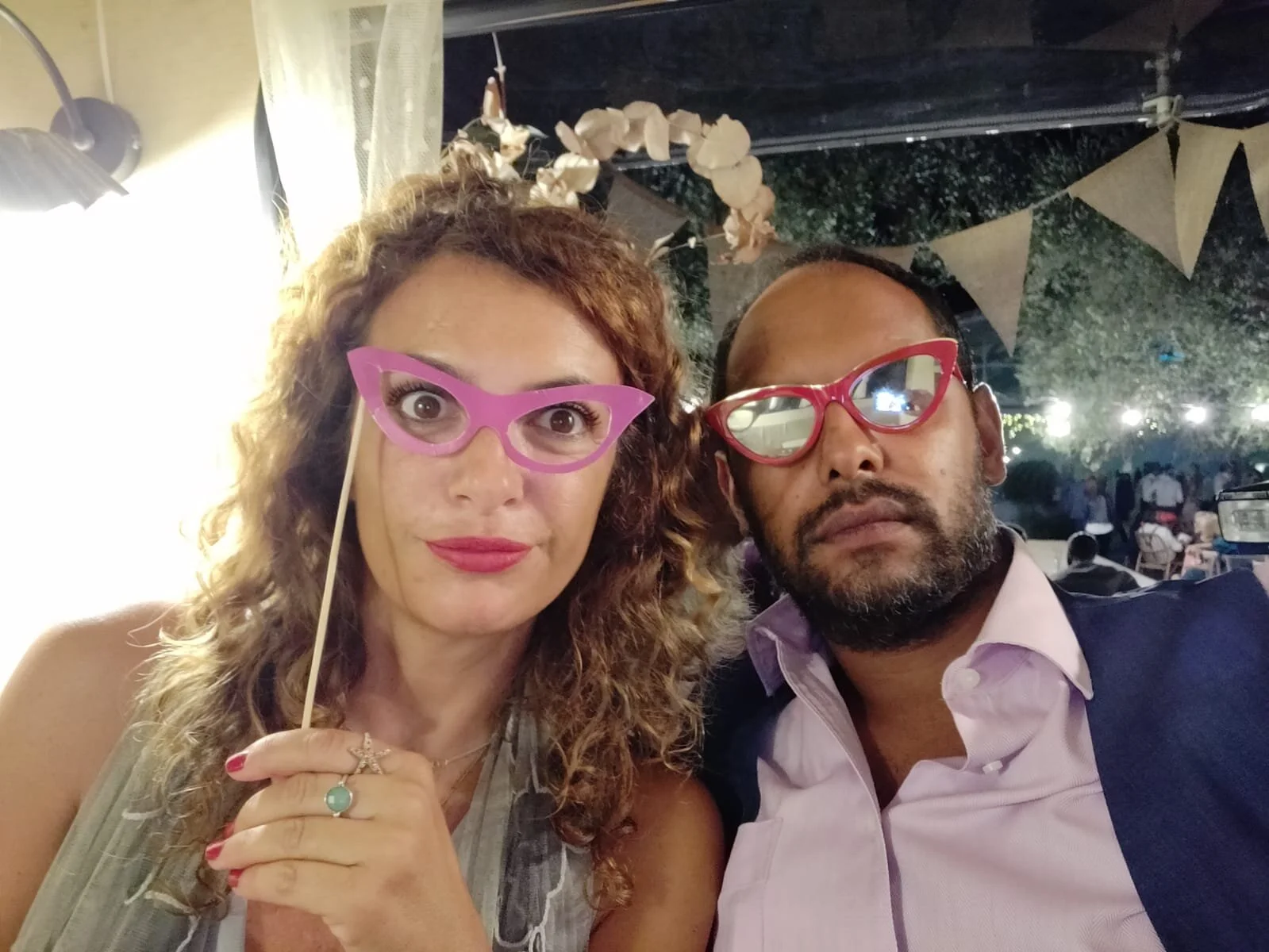
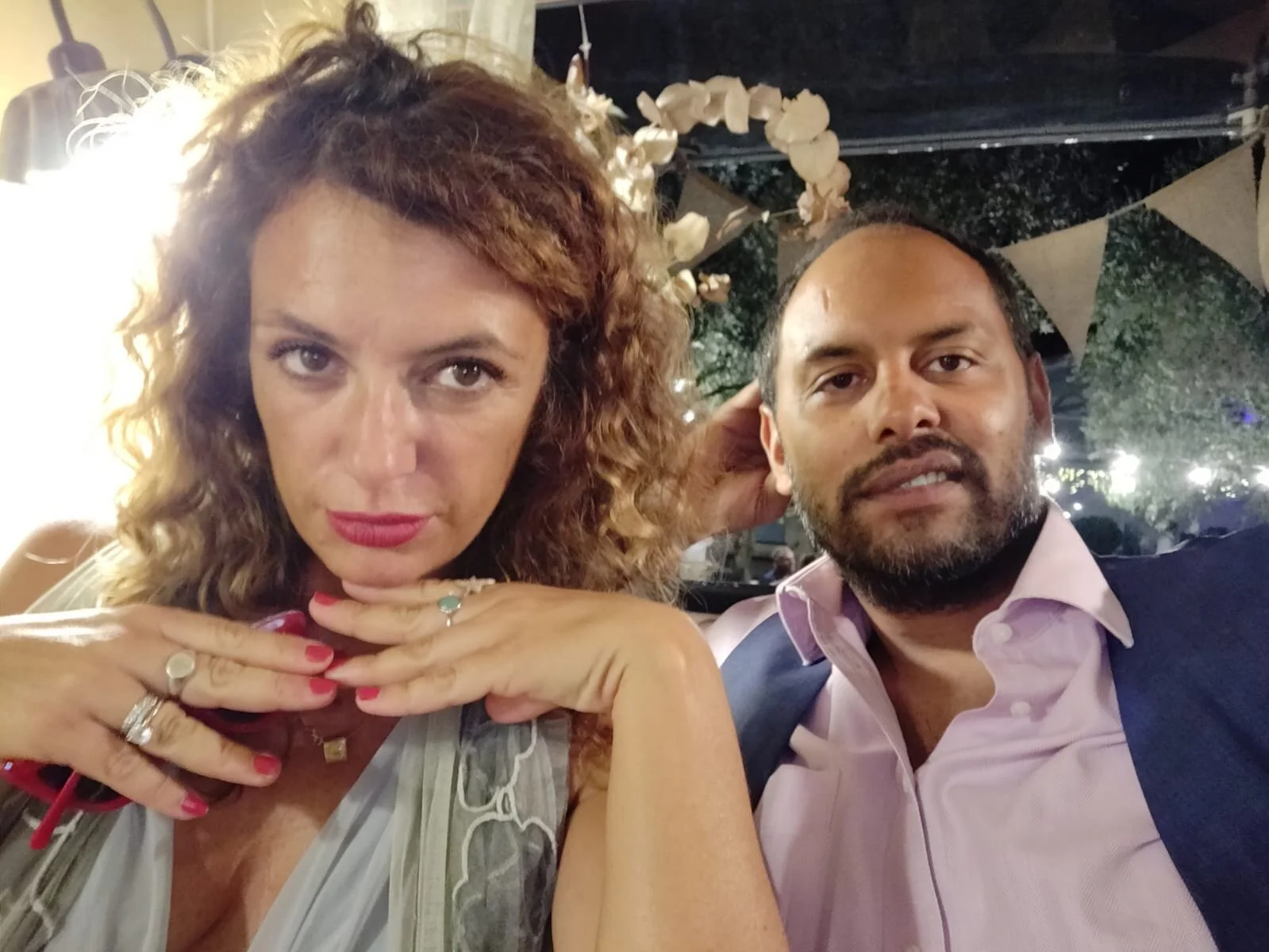
Un esempio. Il giovedì io e l’anglo-arabo ci concediamo il lusso di un appuntamento romantico a settimana da un annetto a questa parte.

Un lusso che costa 50 euro di babysitter, più 70-80 euro di ristorante/bar, più mettiamoci un taxi se eccezionalmente ci allontaniamo dal nostro bar del condominio. Insomma, senza contare uscite speciali che includono spettacoli (a cui ci addormentiamo, compresi a quelli vietati ai minori), viaggiamo sui 150 euro a settimana d’amore, ovvero 600 euro al mese.

Il paradosso è che ogni giovedì arriviamo alle 20 crepati di sonno o infettati da un virus a caso che le nostre figlie super-spreader ci hanno passato.

Suona il citofono e sobbalziamo dal divano dove giacciamo sommersi da una figlia a testa, e in testa.
Ed è Fides, la babysitter che ci ricorda che dobbiamo amarci e levarci dai coglioni. Ormai l’abbiamo pagata.
E come i forzati del capodanno, io cerco di darmi un tono mettendomi gonne di paillette, camicette trasparenti, tacchi a spillo, rossetti fluorescenti. Per poi finire, spesso, al bar del condominio dove puntualmente i camerieri giustamente mi chiedono: ma dove cazzo vai?
No niente, da nessuna parte, ci amiamo qui davanti a un hamburguesa di quinoa e a un entraña con patatas, ah e una boccia di vino por favor, sbadigliando e ridendo fino alle lacrime della misera fine che abbiamo fatto.

Nei peggiori giovedì guardiamo l’orologio dalle 22, aspettando con ansia che si facciano almeno le 23.40 per poter tornare a casa e progettiamo insieme un servizio di stanze ad ore per genitori in libera uscita. Dove possano dormire lontano dallo sguardo giudicante di babysitter e del mondo.

Ieri alla vigilia di San Valentino, era giovedì. A entraña e hamburguesa finite, volevamo salire e chiedere a Fides di lasciarci almeno un letto, ma non ci siamo arresi agli sbadigli e abbiamo preso un autobus fino al quartiere limitrofo per salutare degli amici. Abbiamo mangiato una Torta Guiness e la panna del bar Diana (che meriterebbe un post a parte) e poi col cuore -letteralmente - nello zucchero - ci siamo incamminati mano nella mano a prendere l’autobus verso il letto, come due ragazzini che hanno perso il sonno per troppo amore, e non per troppi figli.

“Oh baby this is the life”! Ha detto l’anglo-arabo felice, non so se per la bella serata o perché era finalmente tempo di andare a casa a dormire. In entrambi i casi non potevo essere più d’accordo.

Love has a price
WhatsApp Image 2020-02-11 at 12.34.12 PM.jpeg

Love has a price.

And this is not a metaphor for giving unconditionally: “I gave you two daughters! Bloody buy me a Zara voucher at least! "
Or for sacrificing your living space: "For God sake, can I at least have breakfast by myself?"
Or for taking on the faults of a bulky and messy flatmate: "Your bloody socks again?"
Or for giving up selfish choices since you now share them with someone else: "Nice new fur coat, but didn’t we agree that you have enough furs now and we no longer have space in the closet?". "Are you crazy? It's an OLD one!".

I'm actually talking about money.

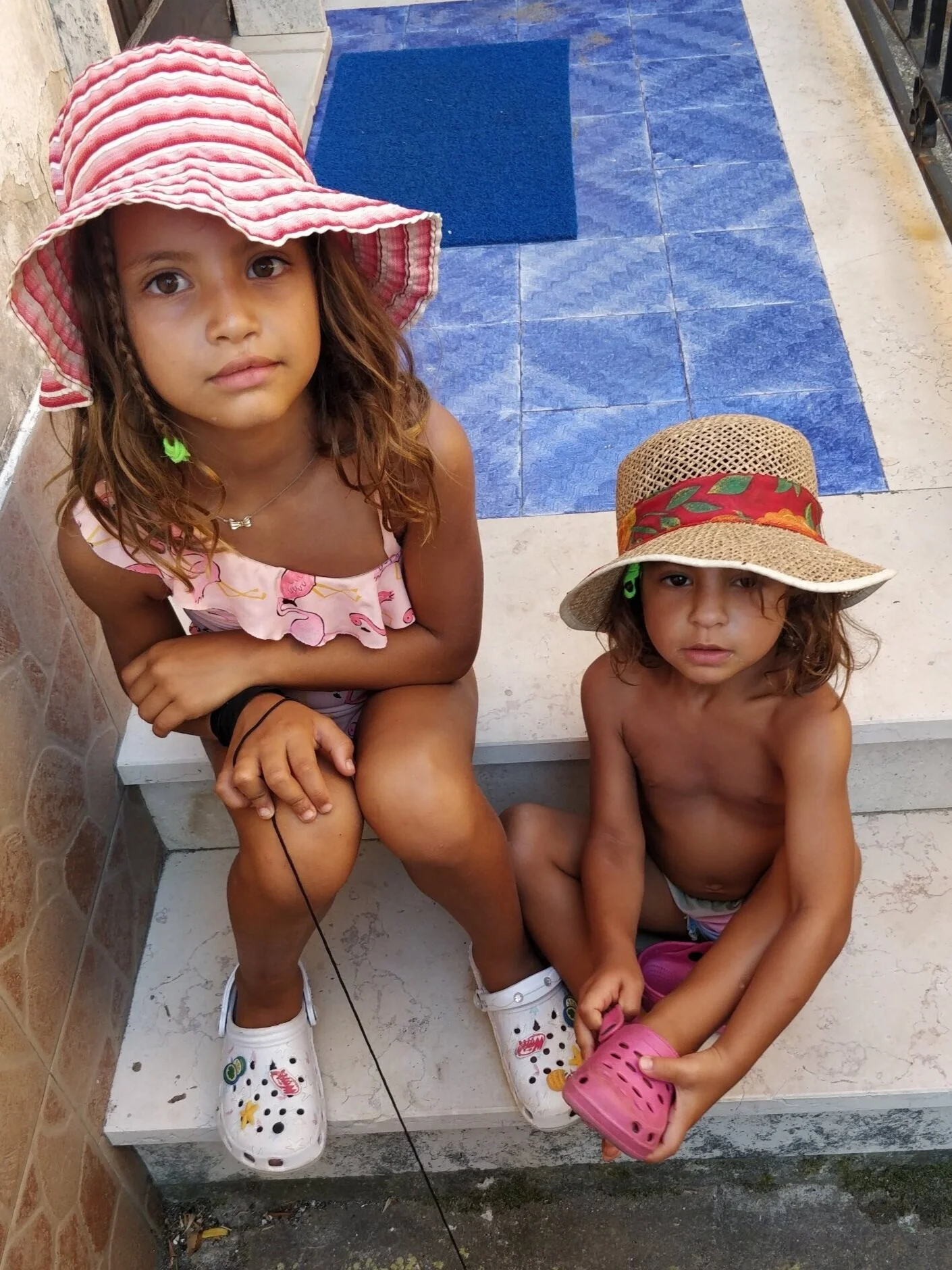
An example. On Thursdays, the Anglo-Arab and I indulge ourselves to a romantic date night, once a week, for the past year.
A luxury that costs 50 euros for a babysitter, plus 70-80 euros for a restaurant / bar, plus a taxi if we exceptionally move away from our (very) local bar (in our apartment block). In short, if we don’t count special outputs that include live shows (where we fall asleep, even at adults-only ones), we spend about 150 euros per week for love, which makes 600 euros per month.

The paradox is that every Thursday at 8pm we find ourselves sleep deprived or infected by a random virus that our super-spreader daughters have passed us.
WhatsApp Image 2020-01-28 at 9.35.53 PM.jpeg

The intercom rings and we jump from the sofa where we lay submerged by a daughter each, sitting on our head. And it is Fides, the babysitter who reminds us that we must go to love each other and get the fuck out. Because we have already paid for it.

I try to pull myself together by putting on sequinned skirts, sheer blouses, stiletto heels, fluorescent lipsticks. To often end up at the (very) local bar downstairs where the waiters punctually and rightly ask me: where the fuck are you going?
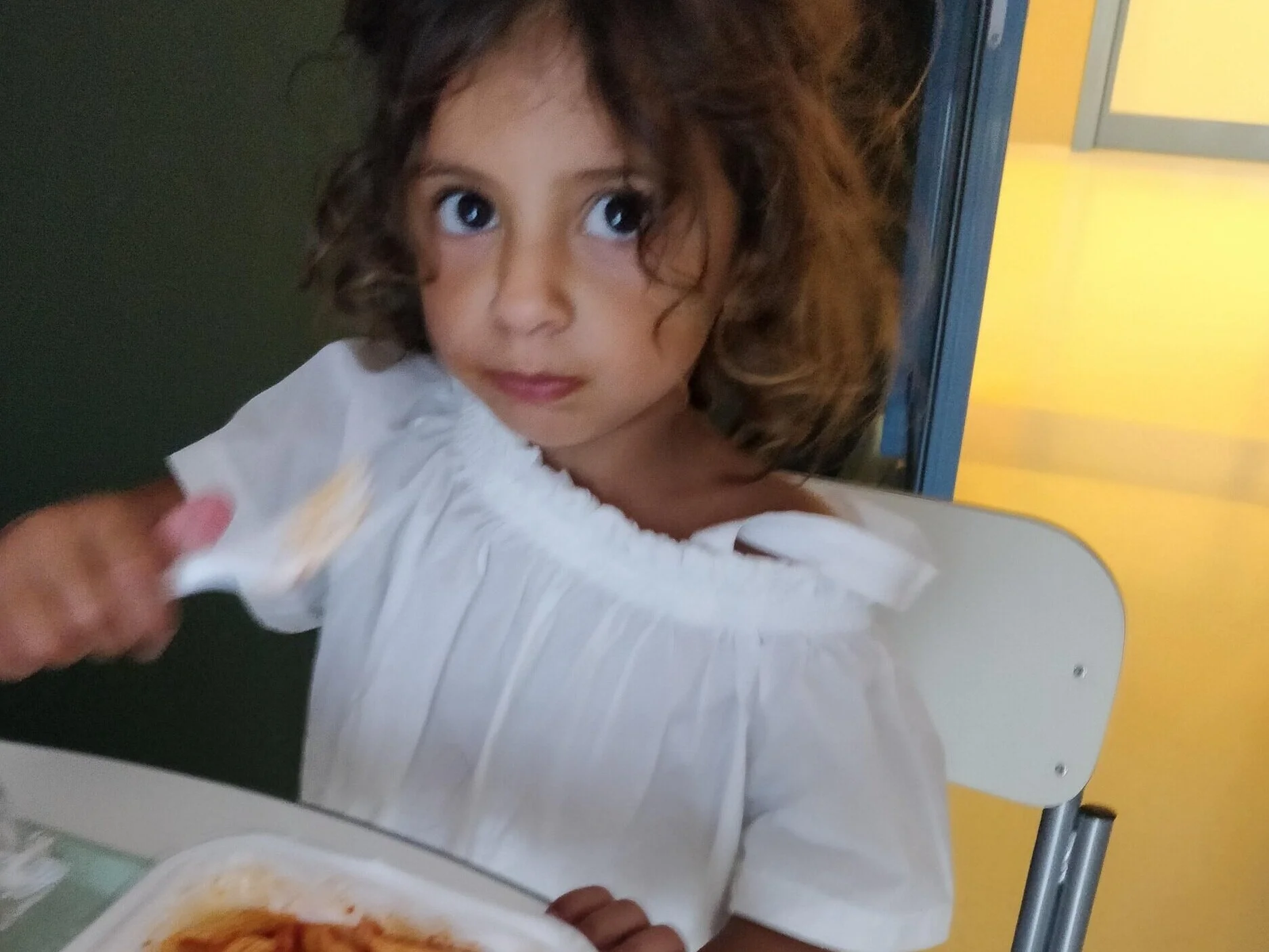
No, nowhere, in fact we are going to love each other here, in front of a quinoa hamburguesa and an entraña with patatas, oh and a bottle of wine por favor, yawning and crying with laughter of our miserable state.

On the worst Thursdays we start checking the time from 10pm, waiting anxiously until it’s 11.40pm to be able to slowly start paying and go back home and we plan together a service of hourly hotel rooms for parents who are on a date. Where they can go and sleep, without being judged by their babysitter and by the world.

Yesterday on Valentine's Day eve, it was Thursday. Once we finished the entraña and hamburguesa, we wanted to go upstairs and ask Fides to leave us at least one bed, but we didn’t give in to yawning and took a bus to the closest neighbourhood to meet friends. We ate a Guinness cake and the cream from the Diana bar (which would deserve a separate post) and then with - literally - sugar-coated hearts, we walked hand in hand to take the bus back to bed, like two kids who lost their sleep due to too much love, and not because of too many children.

"Oh baby this is the life"! The Anglo-Arab said happy, I’m not sure if it was because of the nice evening or because it was finally time to go home. In both cases, I couldn’t agree more.


February 14, 2020 /Daria Simeone
Comment


processed_IMG_20190721_092313.jpg

2 figlie divise in 4. Siete una storia, tutta intera.

November 12, 2019 by Daria Simeone

Ieri all’ora della cena, davanti a un piatto di orecchiette De Cecco con sugo Mutti e parmigiano reggiano, ero qui, nella nostra casa di Barcellona, con la mia famiglia naturalizzata (dal cibo) italiana a parlare di un nuovo compagno di scuola di Mia.

Mia: Si chiama Youssef!

Me: ah Yusuf!

Zi: no Yusif.

Concludeva mio marito, che è in effetti l’unico con voce in capitolo quando si tratta di arabità.

Mia: Si è presentato alla classe e ha detto “Sono arabo”.

Dopo aver indagato meglio e aver scoperto che Yusuf aveva anche detto di venire dal Marocco, si è aperta la solita discussione Occidente vs Resto del mondo, dove io-Occidente faccio domande abbastanza ignoranti e stereotipate e mio marito-Resto del Mondo cerca di rispondermi mantenendo il suo aplomb british, difendendo la sua arabità, e cercando di continuare ad amarmi nonostante tutto.

Sorvolerò sui soliti passaggi tra Zi e me: “se dovessi presentarti non diresti mai che sei arabo!”- “”Certo, direi metà inglese metà arabo”- “No, perché arabo non è una nazionalità” – “Ok allora potrei dire metà europeo metà arabo” – “ma non dire cazzate” ecc ecc.

processed_IMG_20190730_135339.jpg

E arriverò dritta al momento in cui – mentre Viola continuava a mangiare le sue italianissime orecchiette – Mia ci ha guardati come se non ci avesse mai visti e conosciuti prima e ci ha chiesto: ma allora voi di dove siete?

Zi: io sono metà inglese e metà sudanese e tu Mia?

Mia: io sono di Londra.

Zi: Sì, ma tu sei un quarto inglese, un quarto sudanese (e quindi araba come me e Yusif) e metà italiana.

---- faccia confusa di Mia che avrà ereditato le capacità matematiche della madre -----

Zi ha riprovato con le frazioni: diciamo che io sono fatto di due parti, una inglese e una sudanese; tu e Viola siete fatte di 4 parti, una inglese, una sudanese e due parti italiane. E invece mamma è fatta soltanto di una parte, è “tutta intera” italiana.

E in quel momento rivelatore per tutti – tranne che per Viola che continuava con le orecchiette -, mentre Mia scoppiava a piangere dicendo che voleva essere “tutta intera” e non divisa in 4, mi sono sentita così ordinaria. Cazzo solo italiana? Va bene rivendicare al solito le origini miste sannite partenopee e irpine, ma magari qualcosa di più esotico mi avrebbe donato!

O no?

Screenshot_20191112-200539.jpg

Mi è capitato di leggere di una Racial Impostor Syndrome, la sindrome dell’impostore razziale . Ovvero una sorta di spaesamento che porta le persone che vivono nel punto d’intersezione di diverse identità e culture, a sentirsi degli “impostori” in ognuna delle loro singole identità, come se il fatto di non possederne nessuna totalmente, li delegittimasse dall’appropriarsene, dal raccontare le singole identità e culture come proprie.

Non so se l’avere un’identità “semplificata” come la mia aiuti ad avere un senso di appartenenza e di identità più forte o si riduca a un piatto di orecchiette De Cecco col sugo Mutti. Non so se anche chi ha avuto la fortuna di nascere da una mescolanza di appartenenze riuscirà a sentirsi mai parte di qualcosa. So solo che alle mie figlie auguro di ritrovarsi in ogni loro parte, italiana, inglese, sudanese, araba, irlandese, ma anche spagnola e catalana e di saperle raccontare agli altri, magari cucinandole – possibilmente favorendo le orecchiette al Calçots per mere questioni di gusto, grazie. Anche perché se il loro papà anglo-arabo cucina la migliore pasta alla Bolognese e la loro mamma di Avellino prepara il miglior foul sudanese (in scatola), è perché la contaminazione è la nostra speranza che si è avverata.

Screenshot_20191112-200446.jpg

Ieri all’ora della cena, davanti a un piatto di orecchiette De Cecco con sugo Mutti cucinato da mio marito anglo-sudanese, ero qui, nella nostra casa di Barcellona, con la mia famiglia meticcia, in cui l’unica italiana ero io e non mi sono mai sentita così poco “tutta intera”.
”Che siano 1, 2, 4 o 10 parti quelle che dobbiamo sommare per comporre la nostra identità, il risultato è una storia, tutta intera. E non vedo l’ora di ascoltare la vostra” avrei voluto dire a Mia e Viola.

Invece ho alzato i pugni al cielo e ho detto: “2 parti italiane contro 1 inglese e 1 sudanese! Ho vinto io!!!!”

2 daughters split in 4. You are a story, whole.

Screenshot_20191112-200548.jpg

Yesterday at dinner time, in front of a plate of Orecchiette De Cecco with Mutti sauce and Parmesan cheese, I was here, in our home in Barcelona, ​​with my Italian naturalized (food-wise) family talking about Mia’s new classmate.

Mia: His name is Youssef!

Me: you mean Yusuf!

Zi: no, it’s Yusif.

concluded my husband, who is actually the only one with a voice when it comes to “Arabity”.

Mia: He introduced himself to the class and said "I am Arab".

After having investigated better and having discovered that Yusuf had also said he was from Morocco, the usual discussion West vs Rest of the world started, with me-West asking fairly ignorant and stereotypical questions, and my husband-Rest of the World trying to answer while maintaining his British aplomb, defending his Arabity, and trying to continue to love me despite everything.

I will pass over the usual passages between Zi and me: "if you had to introduce yourself you would never say that you are Arab!" - "Of course, I would say half English half Arab" - "No, because Arab is not a nationality "-"Ok then I could say half European half Arab" - " Oh come on just stop saying bullshit "etc etc

So I will come straight to the moment when - while Viola continued to eat her very Italian orecchiette - Mia looked at us as if she had never seen us and met us before and asked us: where are you from then?

Screenshot_20191112-200519.jpg

Zi: I'm half English and half Sudanese and you Mia?

Mia: I'm from London.

Zi: Yes, but you are a fourth English, a fourth Sudanese (and therefore Arab like me and Yusif) and half Italian.

---- Mia’s confused face suggesting she might have inherited her mother's mathematical abilities -----

Zi tried again with the fractions: let's say that I am made of two parts, one English and one Sudanese; you and Viola are made of 4 parts, one English, one Sudanese and two Italian parts. And instead, mom is made only of one part, she is "whole" Italian.

And at that moment, revealing to everyone - except for Viola who continued with the orecchiette - while Mia burst into tears saying that she wanted to be "whole" and not divided into 4, I felt so ordinary. Just bloody Italian? It's ok to claim the Neapolitan Irpinian and Samnite mixed heritage, but maybe something more exotic would have made me better!

Or not?

I happened to read about a Racial Impostor Syndrome. That is a sort of disorientation that leads people who live in the intersection of different identities and cultures, to feel like "impostors" in each of their individual identities, as if the fact of not owning any of them totally, de-legitimises them from appropriating them , from telling stories about their individual identities and cultures as their own.

Screenshot_20191112-200418.jpg

I do not know if having a "simplified" identity like mine helps to have a stronger sense of belonging and identity or only comes down to a plate of De Cecco orecchiette with Mutti sauce. I do not know if even those who have been lucky enough to be born from a mixture of belonging will never be able to feel part of something. I only know that for my daughters I hope they will eventually find themselves in each of their pieces , Italian, English, Sudanese, Arab, Irish, but also Spanish and Catalan and to be able to narrate them to others, perhaps “cooking them” - possibly favouring the orecchiette over the Calçots for mere questions of taste, thanks. Also because if nobody makes pasta with Bolognese sauce better than their Anglo-Arab father, and no one makes the Sudanese foul (out of a tin) better than their mother from Avellino, that is because there is still hope in contamination.

Yesterday at dinner time, in front of a plate of Orecchiette De Cecco with Mutti sauce cooked by my Anglo-Sudanese husband, I was here, in our home in Barcelona, ​​with my mixed race family, where the only Italian was me and I never felt less "whole".

"Whether we have 1, 2, 4 or 10 parts we need to add together to make up our identity, the result is a story, whole. And I can't wait to hear yours " I wanted to say to Mia and Viola.

Instead I raised my fists in the air and said: "2 Italian parts against 1 English and 1 Sudanese! I won!!!!"

November 12, 2019 /Daria Simeone
2 Comments


IMG-20190823-WA0012.jpg

Ci vuole un villaggio

August 24, 2019 by Daria Simeone

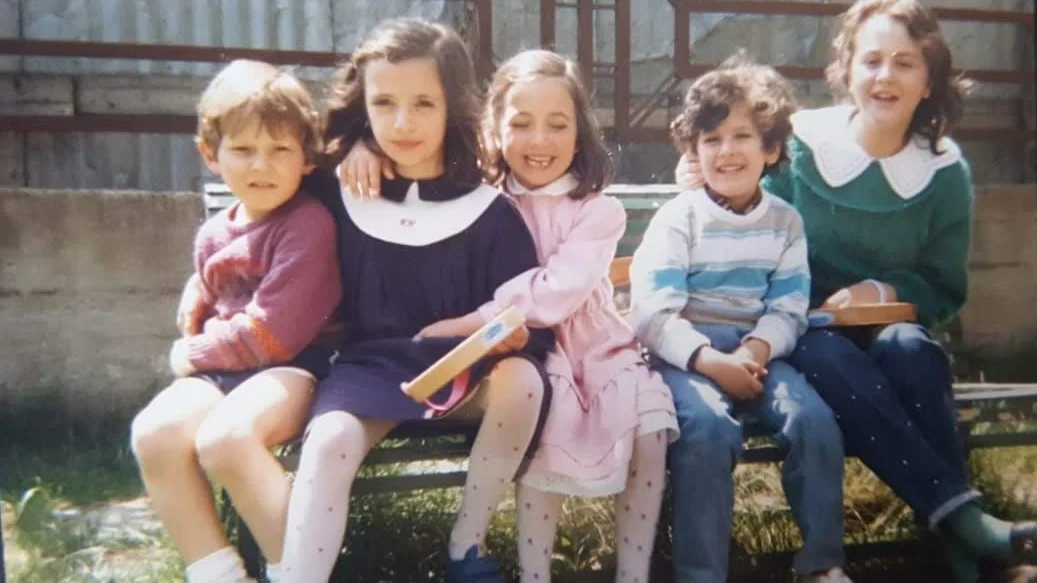
Per crescere un figlio ci vuole un villaggio, dice un detto africano che non a caso è applicabile anche a quel prolungamento del nord Africa che è il sud Italia.

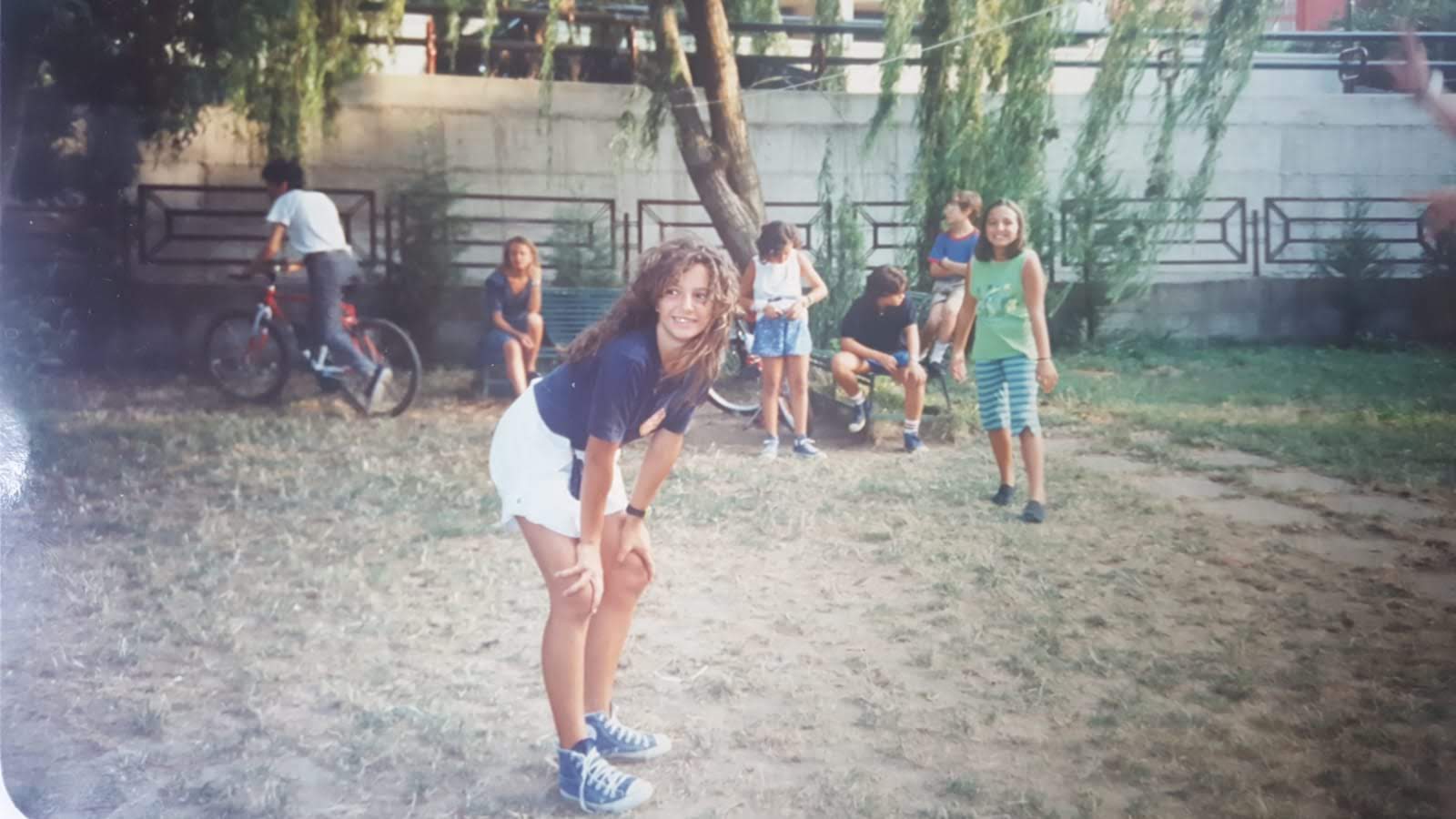
Il mio villaggio, a parte la mia famiglia, è stata la Cooperativa Aquilone, questa sorta di Christiania in salsa irpina, un involontario esperimento sociopolitico nato come spin-off del Pci di Avellino dove un gruppo di compagni di partito all’inizio degli anni 80 si è costruito una palazzina appena fuori dal centro, lievemente crepata dal Terremoto dell’Irpinia dell’80 prima ancora che ci andassimo a vivere– chiara premonizione dell’imminente fine del suddetto partito a cui per fortuna la Cooperativa Aquilone è sopravvissuta -, con un grande giardino e alberi di nocciola tutt’attorno. Dall’ultimo giorno di scuola fino al primo dell’anno scolastico successivo quel giardino era il nostro campo estivo e quei comunisti erano il nostro villaggio.

Passavamo il tempo a spaccarci la testa sulle panchine del giardino, a giocare a pallavolo in due squadre scelte dai due più alti– io venivo sempre scelta per ultima - ad allevare gatti e cani randagi che regolarmente venivano abbandonati sulla soglia del nostro condominio buonista, dando per scontato che da bravi comunisti ce li saremmo accollati per principio. Fanny, Pelo, Jack. E poi Ruud, Blondì, Luna. Decine di cani e gatti e VENTICINQUE bambini. Rapporto numerico tra bambini e adulti-controllori: zero. Ogni tanto qualcuno dal balcone verificava che non si fosse aperta un’altra testa sulla panchina e ci urlava qualcosa come nella pubblicità di Egoiste, affacciandosi a turno.

IMG-20190823-WA0013.jpg

Caliria: dovete togliere questa rete da sotto il mio balcone!!

Laura: Mirkoooooooo, Morenaaaaaaa

Franco: Vi butto un secchio di acqua ghiacciata addosso se non vi stat’ zitt’.

Rosalba: Tittiiiiiiiiii

Mamma: Adriààà tieni delle sigarette?

Caliria: Se non fate smettere di abbaiare questi cani li avveleno tutti. (Caliria era socialista).

IMG_20190731_123406.jpg

Pupetta: Fabio, Chiara, Ninni salite a mangiareee

Insomma il villaggio ci ha fatto rigare più o meno dritti fino all’età della diaspora dei figli, quella che ha lasciato nella cooperativa Aquilone solo dei vecchi che forse non si definirebbero neanche più comunisti, ma che sono rimasti per fortuna buonisti.

Credo che per questi vecchi amici che si fanno compagnia da 40 anni sia stato più facile che per altri genitori veder partire i loro figli. Credo che la loro organizzazione di mutuo soccorso sia stato il loro modo dii tenersi per mano ogni volta che qualcuno andava a trovare la prole a chilometri di distanza e di assicurarsi che nessuno, da quel viaggio, sarebbe tornato ad un nido vuoto.

Quando i miei vengono a Barcellona, Ennio li accompagna all’aeroporto, Adriana annaffia le piante e compra la frutta fresca per quando torneranno, Annamaria cucina il pranzo di tre portate per il banchetto del rientro, Maria Grazia gli fornisce assistenza sanitaria e soprattutto psichiatrica telefonica a distanza 24 ore su 24 e Franco - temutissimo professore di matematica e scrittore di gialli - invia a mamma ogni sera via whatsapp un suo resoconto delle puntate di Un Posto al Sole che si è persa.

IMG_5857.jpg

Perché anche per lasciare andare un figlio ci vuole un villaggio (di veri comunisti).

Il giardino è rimasto vuoto per un po’ di anni, finché non sono arrivati i figli dei figli a rompere il cazzo a turno e rendere nonni tutti quei vecchi comunisti.

Tutti sono nonni di tutti.

Quando io sto per ripartire per Barcellona capita che si riaffaccino ai loro balconi come 30 anni fa, per salutarci da su. Licia e Rosalba lanciando buste intere di caramelle per le nipoti. A volte corre a salutarci persino il cane di Caliria.

It takes a village

IMG-20190824-WA0000.jpg

To raise a child it takes a village, according to an African saying that -no coincidence - also applies to that extension of North Africa called Southern Italy.

My village, besides my family, it’s been the Cooperativa Aquilone, this kind of irpinian version of Christiania, an accidental sociopolitical experiment born as the spin-off of the Communist Party of Avellino where a group of party colleagues that were also friends in the early 80s built a block of flats just outside the city centre - cracked by the Irpiniia’s famous earthquake before we could even move in - premonition of the end of that party to which, thankfully, the Cooperativa Aquilone survived - with a big garden and surrounded by hazelnuts trees.

From the last day of school to the first of the next year that garden was our summer camp and those communists were our village.

We used to spend time cracking our heads open on the benches in the garden, playing volleyball split in two teams, selected by the 2 tallest amongst us - I was always the last chosen - to raise cats and dogs that were regularly abandoned at the gate of our do-good condo, taking for granted that we, good ol’ communists would have adopted them as a matter of principle. Fanny, Pelo, Jack. And then Ruud, Blondì, Luna. Dozens of dogs and cats and TWENTY FIVE kids. Children/carers ratio: zero. Every now and then someone from a balcony would check that no one had cracked his head again and would shout something at us like in the Egoist commercial, peering out of the window in turns.

IMG_6773.jpg

Caliria: you need to take down this volleyball net from under my balcony!

Laura: Mirkoooooooo, Morenaaaaaaa

Franco: I’m gonna shower you with a bucket of freezing cold water if you don’t shut up!

Rosalba: Tittiiiiiiiiii

Mamma: Adriààà have you got any cigarettes?

Caliria: If you don’t stop these dogs from barking I will poison them all. (Caliria was a socialist).

Pupetta: Fabio, Chiara, Ninni food is readyyyy.

Anyway, the village made us toe the line, more or less, until the age of the children’s exodus, when the Cooperativa Aquilone became home only to old people that wouldn’t even call themselves communists anymore, but that stayed do-gooders thankfully.

I believe that for these old friends that kept each other company for 40 years it’s been easier than for other parents to see their children leave. I believe that their mutual aid organisation is their way of holding each other’s hand every time one of them goes to visit the faraway offspring and to ensure each other that nobody, from that trip, will go back home to an empty nest.

When my parents come to Barcelona, Ennio drives them to the airport, Adriana waters their plants and buys fresh fruit for when they get back, Annamaria cooks a three curses for their welcome back meal, Maria Grazia provides health and mental assistance on the phone 24/7 and Franco - once feared math professor and thriller novelist - every night sends to my mum a recap of “Un posto al sole” episodes that she missed.

IMG_8257.jpg

Because it takes a village (of real communists) also to let a child go away from you.

The garden stayed empty for a while, until the children of the children arrived to mess around and make grandparents all those old communists.

All are grandparents to all.

When I leave to go back to Barcelona sometimes they come on their balconies like 30 years ago, to say goodbye from up there. Licia and Rosalba throw bags full of sweets for their granddaughters. Sometimes even Caliria’s dog comes down to say goodbye.

August 24, 2019 /Daria Simeone
2 Comments


Piccoli caffè per genitori che diventano grandi (lontano da te)

April 17, 2019 by Daria Simeone

A casa mia si fa il caffè.

Nel senso letterale che per la maggior parte del tempo nella casa dove sono cresciuta si prepara il caffè, una caffettiera dopo l’altra. Minimo 10-12 al giorno, ma tranquillamente fino e oltre le 20 a seconda di quanta gente circola per casa.

Quando l’anglo-arabo è venuto per la prima volta, come tutti i “forestieri” che sono passati di là, non capiva: ma perché non vi comprate una caffettiera più grande?

Il punto è questo. La macchinetta è da due, sempre. E non è consentito fare uscire tutto il caffè, anzi è necessario fermarne la fuoriuscita quasi a metà, ottenendo una quantità che in realtà corrisponde sì e no a una tazzina e mezzo, che però può essere condivisa da 3-4 persone. Perché il caffè DEVE essere poco. (Tanto poi se ne fa un altro).

Questa pratica è stata masterizzata, facendo vittime: coloro che non hanno mai raggiunto l’eccellenza sono stati via via esclusi dall’azione “fammi ‘no cafè”. A mia sorella ad esempio è assolutamente vietato fare il caffè (tant’è che pure a casa sua a Treviso si è comprata la macchinetta automatica giustamente). Io posso fare quelli tra un pasto e l’altro, ma quelli dei pasti principali: colazione-pranzo-cena, sono strettamente riservati ai miei genitori, master in caffè ristrettissimo.

Il caffè è una coccola, un’attenzione, è il prendersi cura (“stai un poco nguaiat, mo’ ti faccio ’no café a mamma/a papà”): deve essere poco, se è troppo diventa grave e preoccupante segno di sciatteria e disattenzione.

La settimana scorsa sono stata in Italia solo per portare le mie figlie a passare un po’ di tempo coi nonni.

“Fare la nonna a distanza è molto difficile” dice mia mamma ogni volta che la sgamo nel suo contrabbando di cioccolata e caramelle con le miei figlie.

Fare la figlia a distanza, però, neanche è una passeggiata. Ogni volta che si sale sull’aereo ci si aspetta di atterrare a 20 anni fa. Ogni volta che si scende dall’aereo il tempo è invece passato nella direzione opposta e ci si ritrova ad avere a che fare con due persone che stanno invecchiando senza di te. Che per riempire i vuoti che anche tu hai lasciato si sono costruite le loro piccole routine esclusive e a tratti autistiche, in cui tu ti senti di troppo.

Dall’altra parte di questo bozzolo di solitudini ci sono due nonni che l’ultima volta riuscivano a mettere a dormire le loro piccole nipotine cantando We are the world e che adesso se le ritrovano in fase preadolescenziale a cantare “This is me” mentre i suddetti nonni si addormono collassati sul divano. 

Ci restano male, mettono il muso. I bambini diventano loro. In realtà realizzano tutta la vita che si sono persi tra una visita e l’altra.

Tu ci resti male, ti incazzi e di accollarti altri due bambini non ne hai un cazzo voglia. In realtà la rabbia serve a camuffare la tristezza di non sapere più stare insieme come prima, il disagio delle parti invertite, la paura di lasciarli a invecchiare lontano da te. Il terrore che loro perdano colpi e che tu perda loro.

Per fortuna anche stavolta a casa mia si è fatto il caffè. Per fortuna quando, nei momenti critici di questa nuova convivenza a tempo, mia sorella si è alzata con l’intenzione di mettere mano alla caffettiera, mio padre è scattato in piedi dal divano ed è corso a fare il caffè prima che a sigillare le mie preoccupazioni arrivasse anche il caffè di merda di mia sorella.

La caffettiera è sempre da due, il caffè è ancora impeccabile. C’è ancora maestria, c’è ancora cura. Nessuna sciatteria. Per preoccuparsi c’è ancora tempo.


 Small coffee for parents getting old away from you

 In my house we make coffee.

In the literal sense that most of the time in the house where I grew up we make a coffee, one cafetiere after another. Minimum 10-12 times a day, but surely up to and over 20 times, depending on how many people travel around the house.

When the Anglo-Arab came for the first time, like all the "foreigners" who passed by, he didn't understand: but why don't you buy a bigger cafetiere?

The point is this. The cafetiere is for two cups, always. And it is not allowed to let all the coffee come out, rather it is necessary to stop the spill almost half way through, obtaining a quantity that in reality corresponds maybe to a cup and a half, which however can be shared amongst 3-4 people. Because the coffee MUST be little. (So ​​then we make another one).

This practice has been mastered, making victims: those who have never achieved excellence have been gradually excluded from the "make me a coffee" action. My sister, for example, is absolutely forbidden to make coffee (so much so that even in her house in Treviso she rightly bought the automatic machine). I can do those between one meal and another, but those of the main meals: breakfast-lunch-dinner, are strictly reserved for my parents, master in very restricted coffee.

Coffee is a cuddle, an attention, coffee is caring ("you look a little miserable, let me make you a coffe son / daughter"): it must be short, if it is too much it becomes a serious and worrying sign of sloppiness and carelessness.

Last week I was in Italy just to take my daughters to spend some time with their grandparents.

"Being a grandmother from a distance is very difficult," my mom says every time I catch her smuggling chocolate and sweets to my daughters.

Being a daughter from a distance, however, isn’t easy either. Every time you get on the plane you expect to land 20 years ago. Every time you get off the plane, time has traveled fast but in the opposite direction and you find yourself dealing with two people who are aging without you. Two people that to fill in the gaps - that you contribute to leave - have built their small exclusive and sometimes autistic routines, in which you feel unwelcomed.

On the other side of this cocoon of solitudes there are two grandparents who, during our last visit still managed to put their little granddaughters to sleep by singing We are the world, but this time find them in their preadolescent phase singing "This is me" while the aforementioned grandparents fell asleep on the sofa.

They get upset, they start pouting feeling hurt. They turn into little kids too. The truth is they realise all the life they have missed between one visit and another.

You get upset too, you are actually pissed off and there’s no way you can deal with two more kids besides your children. The truth is, anger serves to camouflage the sadness of not knowing how to stay together as before, the discomfort of the reversed roles, the fear of leaving them to grow old away from you. The terror that they lose it and that you lose them.

Luckily even this time, we made in my house. Luckily when, at the critical moments of this new short-term cohabitation, my sister got up with the intention of putting her hand to the cafetiere, my father jumped up from the sofa and ran to make coffee before my sister’s shitty coffe would arrive to seal my concerns.

The cafetiere is always for two cups, the coffee is still impeccable. There is still mastery, there is still care. No sloppiness. There is still time to start worrying.


Read More
April 17, 2019 /Daria Simeone
Comment


La festa del genitore single

March 19, 2019 by Daria Simeone

In napoletano/avellinese ci piace assai scendere nei dettagli quando malediciamo qualcuno: Puozz’ avé mez’ora ‘e petriata dinto a nu vicolo astritto e ca nun sponta, farmacie ‘nchiuse e miedece guallaruse. Ovvero: che tu possa essere colpito da pietre in un vicolo stretto e cieco, senza  trovare farmacie aperte e possibilmente imbattendoti in medici erniosi ovvero lenti nel soccorrere.

Sabato mattina, mentre avevo la testa nel cesso vomitando, con mia figlia di due anni accanto che in modalità disco-rotto mi ripeteva “What’s that mummy? Can I see? E perché? What’s that mummy? Can I see? E perché? What’s that mummy can I see? E perché? ecc” ragionavo sul fatto che un’altra maledizione pressoché letale potrebbe essere “Che tu possa svegliarti ancora ubriaco di Cava catalano, con la nausea del primo mese di gravidanza, ma con le figlie già nate e in piena ‘fase del perché’ che ti parlano in un’altra lingua”.

Eroe del giorno: mio marito, il santo Padre che festeggiamo oggi.

L’anglo-arabo ha vestito le figlie logorroiche (al solito mettendogli addosso dei pigiami ma va benissimo) e le ha portate lontano dalla mia testa pulsante, riportandole indietro ore dopo, ad hangover finito.

Tra un pisolino rigenerante e l’altro, il dio delle città e delle immensità come monito mi ha fatto finire per caso su questo articolo, che in estrema sintesi sostiene: ma quale festa del papà, della mamma, della nonna…ci vorrebbe una festa della madre single (e del padre single, aggiungo io).

Una festa per quei genitori, per intenderci, che probabilmente sabato mattina si trovavano nella mia stessa posizione (con testa nel cesso) ma che realisticamente non potevano permettersi di restarci. Perché accanto a loro non c’era nessun padre (o madre) che potesse allontanare o intrattenere l’inopportuna prole.

Eroi di tutti i santissimi giorni: i padri e le madri single.

E allora oggi per la festa del papà avrei potuto scrivere di quanto l’anglo-arabo sia bravo a pettinare le figlie (ma già l’ho scritto).

O di quanto siano buone le pizzelle fritte del mio papo (ma già l’ho scritto)-

O di quanto siano padri altrettanto degni di zeppole alla crema quelli delle coppie omosessuali (ma già ho scritto pure questo).

O di quanto siano boni i padri svedesi (così, a caso, ma ho già scritto persino questo).

Ma ho pensato che sia giusto usare questa simpatica festa – su cui non ho più un cazzo da dire – per fare gli auguri ai genitori che si sono trovati ad essere single perché, per una qualunque ragione, la loro famiglia si è spezzata in due parti non eque.

Brava tu, mamma con figlio che ha 41 di febbre e devi decidere da sola se portarlo in ospedale/ricoprirlo di cubetti di ghiaccio/chiamare l’esorcista.

Bravo tu, padre che a Carnevale vesti tua figlia da Madonna dell’Arco, pensando di averla vestita da Elsa di Frozen.

Brava tu, madre che non ti ammali mai, perché sennò chi lo porta tuo figlio all’ospedale (lascia stare i cubetti di ghiaccio che fanno malissimo. Al massimo l’esorcista).

Bravo tu, padre che fino a un anno fa non sapevi neanche dove fosse l’armadio di tua figlia e ora lo hai addirittura  riorganizzato in base allo spettro dei colori, dando sfogo al tuo disturbo ossessivo compulsivo.

Bravi voi che accompagnate i vostri figli a scuola, lavorate, li andate a prendere, fate la spesa, gli cucinate, gli fate la doccia, gli leggete le favole. Tutti i santi giorni. E siete ancora tutti interi (e senza drogarvi!!)

Ma più che dar loro un’altra inutile festa per santificarli, regaliamogli il nostro supporto, in modo che possano riprendersi un po’ di quella libertà che hanno perso nel proseguire da soli il lavoro che avevano iniziato con qualcun altro.

Portate i loro figli a fare un giro, fategli una spesa, preparategli una cena.

E soprattutto, quando vi capita di incrociarli, abbracciateli forte.

Single Parent’s Day

In Neapolitan we very much like to go into details when it comes to cursing: may you be stoned in a narrow blind alley, then not find any open pharmacies and receive very slow medical help.

Saturday morning, while my head was in the toilet, vomiting with my two-year-old daughter next to me, in “broken-record mode”, repeating: "What's that mummy? Can I see? Perché? What's that mummy? Can I see? Perché? What's that mummy can I see? Perché? Etc”, I came up with another almost lethal curse "May you wake up still drunk on Catalan Cava, with the nausea of ​​the first month of pregnancy, but with your daughters already born and in full ‘WHY phase’ speaking to you in foreign language”.

Hero of the day: my husband, the holy Father that we celebrate today.

The Anglo-Arab dressed his chatterbox daughters (in pyjamas as usual, but that's fine) and took them away from my throbbing head, bringing them back hours later, once the hangover was over.

Between a regenerating nap and the other, god warned me making me come across this article, which in a nutshell says: forget father's, mother's, grandmother's day ... we need a Single mother’s (and single father’s, I might add) Day.

A Day for those single parents, so to speak, that on Saturday morning could have been in the same position as me (with their head in the toilet) but realistically they could not afford to stay there. Because on their side there was no father (or mother) who could take away or entertain the unsuitable offspring.

Heroes of every given day: single fathers and mothers.

So today, for Father's Day, I could have written how good the Anglo-Arab is in combing his daughters hair (but I've already written about that)

Or how good my dad’s fried pizza is (but I've already written about that) )

Or how gay fathers are equally worth celebrating with donuts (but I've already written about this too)

Or how hot Swedish fathers are (randomly, but I've already written even about this).

But I thought it would use this nice Day- on which I don't have any more to say - to celebrate the parents who ended up being single because, for whatever reason, their family broke in two unequal parts.

Well done you mum, for dealing with your son that has a 41c temperature and you have to decide on your own whether to take him to the hospital / sprinkle him with ice cubes / call the exorcist.

Well done you father, for dressing up your daughter at Carnival like the Virgin Mary, thinking that was Elsa from Frozen’s dress.

Well done you mother, for never getting sick, because otherwise who’s gonna take your son to hospital (forget the ice cubes, they are dangerous. Maybe the exorcist...).

Well done you father, that up until a year ago you didn't even know where your daughter's wardrobe was and now you have even reorganised it according to the color spectrum, giving vent to your OCD.

Well done to you all for dropping off your children at school, go to work, go pick them up, do the shopping, cook for them, shower them, read bedtime stories. Every single day. Without completely losing yourself (and without taking drugs !!)

Better than giving single parents another useless Day to sanctify them, we should support them, so they can get back some of that freedom they lost while continuing on their own the work they had started with someone else.

take their children for a walk, do the shopping for them, make them dinner.

And above all, next time you meet one of them, hug him/her tight.


Read More
March 19, 2019 /Daria Simeone
3 Comments


  • Newer
  • Older

Subscribe by Email