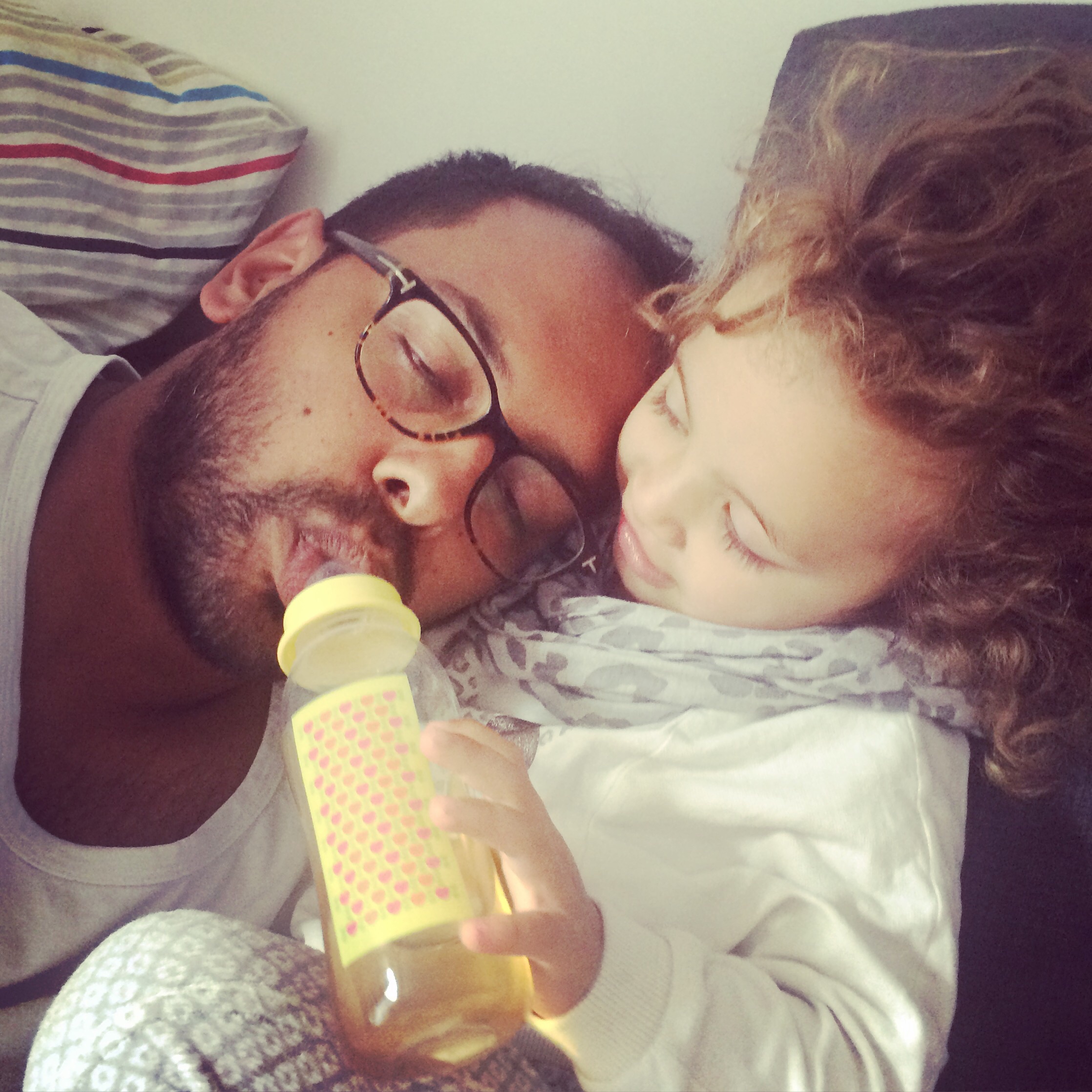
Tutte avremmo bisogno di uno svedese (che faccia il padre)
Mentre scrivo qui a Londra è praticamente novembre. Sotto la pioggia e con 13 gradi si incontrano ben poche persone abbronzate, e quando le incontri le invidi inevitabilmente. "Dove sei stata, a Formentera eh? Maldive? Ponza? Salina? Olbia?"
“Sono stata a Perugia al concorso della Rai – mi ha risposto una - e il sole era così forte che solo ad aspettare che il test iniziasse mi sono abbronzata”.
Ah, ok.
“Sono stata a un matrimonio in Svezia – mi ha detto un’altra - e il tempo era bellissimo, siamo stati persino in spiaggia”.
C-O-S-A?! Ma in Svezia non nevica 10 mesi all’anno? In spiaggia col clima subpolare?
A quanto pare persino in Svezia è estate, almeno per qualche giorno. Ciò appreso, è crollata l’ultima remora che mi tratteneva dal trasferirmi nella patria dei “latte papas”, anche detti lattepappors. In Italia, se esistessero, li chiameremmo casalinghi. In Inghilterra stay-at-home-dads, i padri-che-stanno-a-casa. Il primo fa pensare a detersivi e spugnette, il secondo a mariti depressi, a casa tutto il giorno col grembiule addosso ad aspettare che le mogli rientrino per raccontare loro cosa succede nel mondo che va avanti senza di loro. Invece gli svedesi, che notoriamente non sono campioni nel nominare i mobili dell’Ikea, hanno dato il nome giusto almeno a questi padri che, durante il loro (lunghissimo) congedo di paternità, si incontrano al bar con i pupi attaccati al collo come sciarpe sorseggiando un bicchiere di latte-macchiato. Ed ecco che fare il “latte papa” diventa subito glamour. Certo nessuno si è mai sforzato di trovare una definizione glamour anche per noi donne in maternità, ma va detto che quello che succede in Svezia va al di là di qualunque definizione glamour ed è abbastanza speciale.
- La Svezia, tanto per cominciare, è al quarto posto nel Global Gender Gap Index 2014 che misura l’uguaglianza dei sessi in tutti i Paesi. Da italiana abituata al momento-vergogna ogni volta che scorro questo genere di classifiche cercando l’Italia, nessuna sorpresa a trovarla 69esima. Il Regno Unito è al 26esimo. Ai primi tre posti Islanda, Finlandia e Norvegia.
- In Svezia 13 ministri su 24 sono donne. E nessun giornale perde tempo a parlare di come si vestono (e non perché non siano fighe quanto la Boschi).
- Ai genitori vengono dati 16 mesi di maternità da dividersi a piacere (purché ognuno faccia un minimo di 60 giorni). 390 di questi giorni sono pagati all’80%.
- Le spese per l’assistenza all’infanzia sono quasi totalmente a carico dello Stato e il massimo che una famiglia può arrivare a spendere è il 3% del proprio reddito. In media, per un bambino, una famiglia non spende più di 150 euro al mese, gli asili sono aperti tutto il giorno e la notte, per i genitori che fanno i turni.
- L’educazione, università inclusa, è gratuita.
- Ad aprile la Swedish Academy (che promuove la lingua svedese) ha introdotto un nuovo pronome neutro, “hen” in modo da poter evitare di usare “han” o “hon” – lui e lei – in situazioni in cui non c’è bisogno di specificare il genere.
- Le tasse arrivano al 56,6% e nessuno se ne lamenta perché, tutto sommato, considerando quello che ricevono in cambio dallo Stato è un ottimo affare.
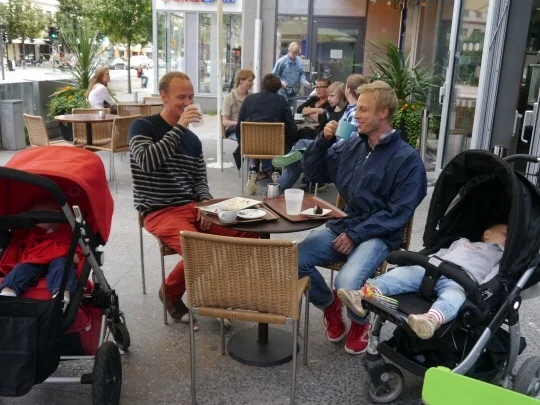
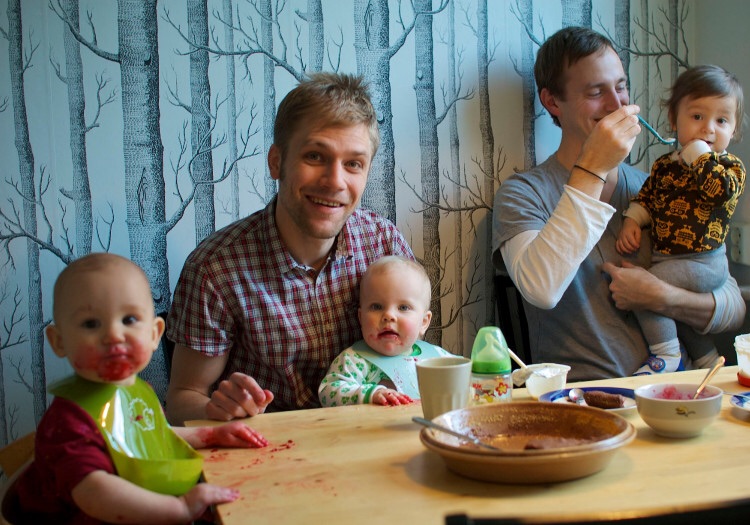
E’ per questo che i latte papas non sono una moda, né un esperimento. Sono una realtà. Sono padri a cui lo Stato dà una possibilità, quella di scoprire quanto sia tosta prendersi cura di un figlio che non ha pietà di loro quando sono stanchi o hanno la man-flu, e che non capisce perché non si possa giocare, cucinare e disegnare contemporaneamente. Un giornalista inglese che ha fatto il latte papa a Malmo per 6 mesi ci voleva scrivere un libro, ma in quei mesi è riuscito a stento scrivere una riga. Ai latte papas, però, viene data soprattutto la possibilità di provarci. Di provare a preparare la cena facendo pernacchie, far volare un aeroplano in soggiorno e ballare il valzer in corridoio con il loro bimbo, tutto contemporaneamente. E guai a chi dice che stanno provando a fare le mamme: stanno provando a fare proprio i papà.
In Italia, con un solo giorno di congedo parentale obbligatorio e due facoltativi, la strada per avere dei “caffè espresso papà” che possano provarci è ancora lunga. Gli inglesi, invece, con un paternity leave estendibile a 26 giorni e la possibilità di “maternità condivisa” dal 5 aprile scorso si stanno avviando ad avere anche loro dei “cappuccino dads”. E c’è già chi propone di andarsi a fare piuttosto una birra. Magari la Guinness, dice che stimola la produzione di latte._TIW
Latte Papas from Sweden: who said nothing is like a mother?
As I write in London is basically November. In the rain and 13 degrees you don't meet many tan people. When you do you get envious "So, where have you been, Formentera uh? Maldives? Ponza? Salina? Olbia?"
“I was in Perugia. Competing for a job at RAI – one said - the sun was so strong that I tanned whiles waiting to take a test."
Ah, ok.
"I was at a wedding in Sweden - said another - and the weather was beautiful, we went to the beach." WHAT?! But doesn’t it snow for like 10 months a year? On the beach? With subpolar weather conditions?
Apparently even Sweden have a summer, for at least a few days. Learning this fact, the last obstacle that stopped me from moving to the home of the "latte papas" or lattepappors was removed. In Italy, if they existed, we would call them house-husbands. In Uk stay-at-home-dads, suggesting that these depressed men are at home all day wearing an apron and waiting for their wives to come back and tell them what happens in the outside world. The Swedes, instead, who are definitely not good at naming Ikea furniture, named aptly fathers who, during a (very long) paternity leave, meet at the bar with their babies worn as scarves attached to their necks while sipping a cup of latte. And here we go, being a latte papas is immediately glamorous. Of course no one ever tried to find a glamorous definition for women on maternity leave, but it must be said that what is happening in Sweden goes beyond any glamorous definition and is quite special.
- Sweden, for a start, is in fourth place in the Global Gender Gap Index 2014 that measures gender equality in all countries. Being used to feeling ashamed every time I scroll this kind of chart looking for Italy, I wasn't surprised to find it holding 69th place. The UK is 26th. The first three places go to Iceland, Finland and Norway.
- In Sweden 13 out of 24 ministers are women. Newspaper don't waste anyones time talking about how they dress.
- Parents are given 16 months of parenting leave to be split as they choose (both must use at least 60 days). 390 days 80% of their pay.
- Childcare is subsidised by the State, and is capped at 3% of a family’s income. On average, for each child, families rarely pay more than £113 a month. Nurseries are open all day and night to allow for shift work.
- All education, including university, is free.
- In April, the Swedish Academy (the institution that promotes Swedish language) introduced a new gender-neutral pronoun “hen” to bypass the need to use “han” or “hon” – he and she – if it’s thought that knowing someone’s gender is unnecessary.
- Taxes are 56.6%, and no one complains because, after all, considering what people receive in return from the government is a great deal.
That’s why latte papas are not just in fashion or an experiment. They are a reality. They are fathers that are given a chance to find out just how tough it is caring for a child that does not have mercy towards them when they are tired or have man-flu, and doesn’t understand why they cannot play, cook and draw at the same time. A British journalist who was a latte papa in Malmo for 6 months wanted to write a book about it, but he could barely write a line. Latte papas, though, have above all the opportunity to try. To try to make dinner blowing raspberries, to fly a plane into the living room and dance the waltz in the hallway with their child, all at the same time. Don't even think they are trying to be mothers, because they are just trying to be dads.
In Italy, with only one day of paternity leave, and two more optional days, the "espresso papà" is still a long way away. The British, however, who have extended paternity leave to 26 days and with the possibility of Shared Parental Leave introduced on the 5th of April, are starting to have their own "cappuccino dads". Some are already going for a cheeky pint instead of a cappuccino. Maybe a Guinness, after all it does stimulate milk production._TIW